
Softlogic Life has become the first insurance company in Sri Lanka to join the Partnership for Carbon Accounting Financials (PCAF), a global, industry-led initiative that enables financial institutions to measure, manage, and disclose greenhouse gas emissions associated with their financing and investment activities.
The milestone places Softlogic Life at the forefront of climate accountability within Sri Lanka’s insurance sector, as financial institutions globally move beyond operational emissions to address the significantly larger climate impact embedded within their balance sheets. Since 2015, PCAF members including commercial banks, development banks, asset owners, asset managers, and insurers have worked collaboratively to develop and implement common standards for greenhouse gas accounting across financial portfolios.
This collective effort has helped financial institutions worldwide better understand the emissions associated with their loans and investments.By adopting the PCAF Global GHG Accounting and Reporting Standard for the Financial Industry, Softlogic Life will be able to systematically measure emissions linked to its investment activities, an area that represents the largest share of emissions exposure for most financial institutions.
The move also strengthens the Company’s alignment with emerging climate disclosure requirements, including SLFRS S2, which mirrors the IFRS S2 Climate-related Disclosures standard. For the financial year 2024, Softlogic Life reported total Scope 1, 2 and 3 emissions of approximately 4,700 tCO₂e, with investment-related emissions accounting for the majority. Through PCAF, the Company aims to enhance the transparency, consistency, and comparability of its climate disclosures, while embedding emissions data into investment governance, risk management, and long-term capital stewardship.
Importantly, Softlogic Life’s ability to take a data-driven approach to climate accountability is underpinned by its strong financial and operational performance. During the nine months ending 30 September 2025, the Company recorded Gross Written Premium of Rs. 28.2 billion, representing 29 percent year-on-year growth, alongside Profit Before Tax of Rs. 3.3 billion and Profit After Tax of Rs. 2.3 billion. This sustained growth has enabled continued investment in risk management systems, technology platforms, and governance frameworks that support more sophisticated climate measurement and reporting.
Measuring emissions associated with financial activitiesis widely recognised as the foundation of an effective climate action journey for financial institutions. Once emissions data is established, institutions are better positioned to conduct scenario analysis, set credible targets, inform strategic actions, and disclose progress over time. Together, these elements are critical to portfolio alignment and long-term decarbonisation.
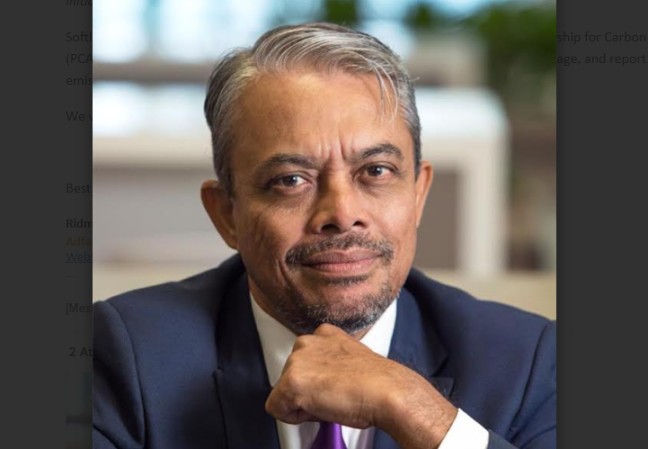
Commenting on the development, Softlogic Life Managing Director, Iftikar Ahamed, said, “Climate risk is financial risk. Insurers have a responsibility to measure what they finance, not just what they operate. Joining PCAF is a deliberate step to bring greater discipline, credibility, and accountability to how we assess climate impact across our investment activities. As an insurer with a long-term view of risk, protection, and capital stewardship, joining PCAF is foundational to how we future-proof our business and support a more resilient economy.”
PCAF was launched globally in 2019 and now brings together over 700 financial institutions worldwide, including banks, asset managers, and insurers, to develop common standards for measuringemissions associated with financial activities. Members collaborate to advance best practices in climate measurement and disclosure across loans, investments, and underwriting activities. The strategic move by Softlogic Life reinforces its leadership in sustainable future ready insurance and signals a clear intent to move beyond high-level commitments toward measurable, comparable, and decision-driven climate action.

Softlogic Life Managing Director, Iftikar Ahamed